⠀
⠀
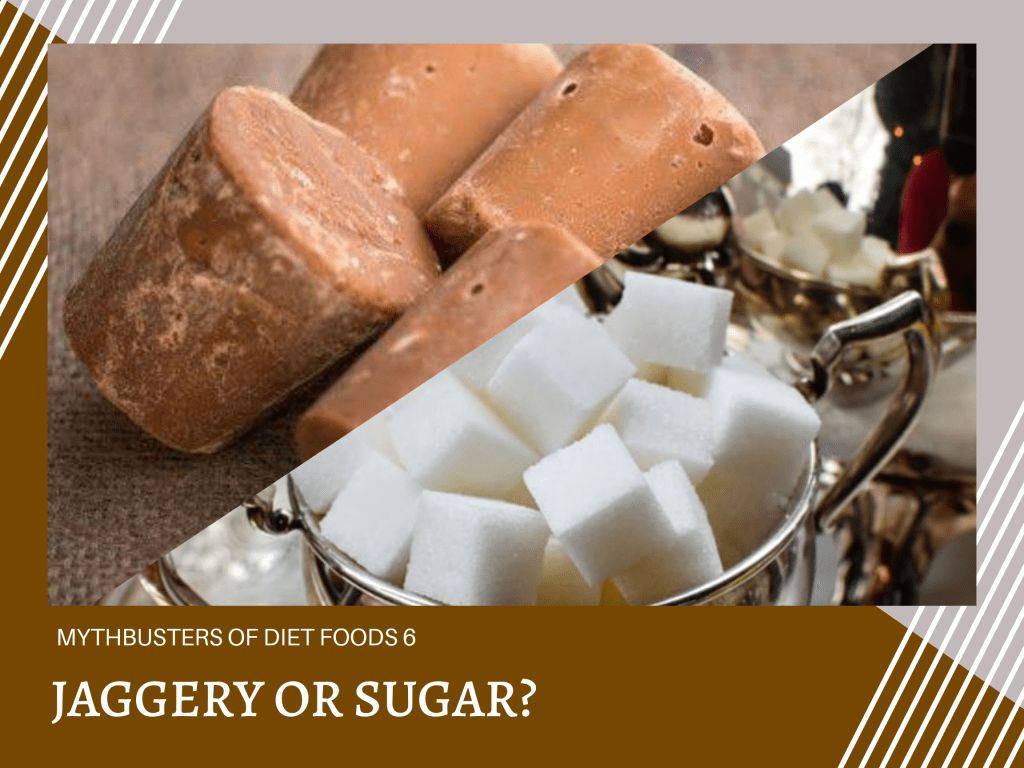
Jaggery and sugar are two common sweeteners used throughout the world. Although both are obtained from the same sources, they are much different in their properties and benefits.⠀
⠀
Just as twins are different in many respects; jaggery and sugar, made from the same sugar cane juice, are different from one another. These differences must be kept in mind for their proper use.⠀
⠀
Being one of the simplest available forms of sucrose, sugar is instantly absorbed in the blood and releases a burst of energy. This may prove harmful to organs such as the kidneys, eyes, and brain, particularly for patients with diabetes.⠀
⠀
Jaggery is far more complex than sugar, as it is made up of long chains of sucrose. Hence, it takes time to digest. This provides energy for a longer time and is not harmful to the body. However, this does not certify it as fit for consumption by diabetics, because ultimately, it is sugar. Jaggery also contains iron, which is good for health, particularly for those who are anemic or lack iron.⠀
Again, jaggery also contains traces of mineral salts which are very beneficial for the body. You might have experienced this when consuming jaggery, it leaves a hint of salt on the tongue. These salts come from the sugar cane juice where it is absorbed from the soil. Furthermore, jaggery is very good as a cleansing agent. It cleanses the lungs, stomach, intestines, esophagus, and respiratory tracts.⠀ Those who face dust in their day to day life are highly recommended to take a daily dose of jaggery. This can keep them safe from asthma, cough, cold, and congestion in the chest.⠀
⠀
Jaggery is rich in iron and thus is highly recommended for anaemic people. It also contains many minerals such as Magnesium, Potassium, Calcium, Selenium, Manganese and Zinc. Since no chemicals are used in preparation of jaggery, some minerals and vitamins remain intact in it, compared to refined sugar.
 Nutrition